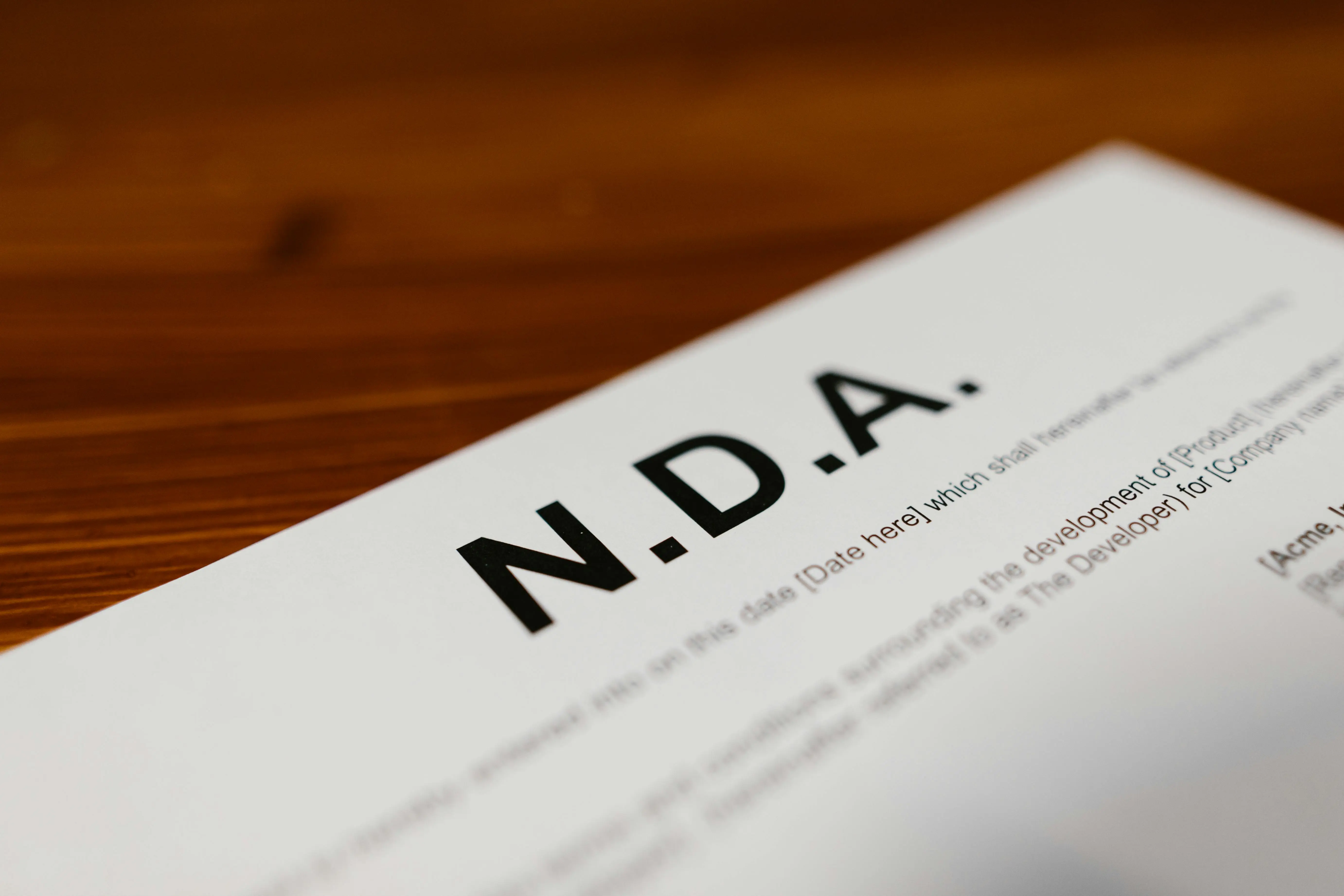
Understanding NDAs and Non-Competes
Companies and professionals frequently encounter two common legal tools: Non-Disclosure Agreements (NDAs) and Non-Compete Agreements. Although both aim to protect business interests, they do so in very different ways. Mixing them up can lead to unenforceable contracts or unnecessary legal exposure.
This article breaks down how NDAs and Non-Competes work, when to use each, and how to ensure your agreements comply with U.S. employment law. schedule consultation to have a lawyer review or draft your agreements properly.
What Is an NDA?
An NDA (Non-Disclosure Agreement) protects confidential information shared between parties. It’s a legal promise not to disclose or misuse proprietary data, trade secrets, or other sensitive business details. NDAs are common in business partnerships, product development, and employment relationships.
Typical information protected by NDAs includes:
- Customer and supplier lists
- Financial and pricing information
- Product formulas, prototypes, or software code
- Marketing strategies and business plans
- Technology or R&D data
NDAs can be unilateral (one party discloses) or mutual (both share confidential information). They remain enforceable as long as the information is genuinely confidential and not publicly known. contact us to get a customized NDA template tailored to your industry.
What Is a Non-Compete Agreement?
A Non-Compete Agreement restricts an employee or business partner from working for competitors or starting a competing business for a certain time and within a defined area. Its goal is to protect a company’s goodwill, confidential information, and client relationships.
Typical uses include:
- Preventing former employees from joining direct competitors
- Protecting trade secrets and customer relationships
- Maintaining exclusive know-how after mergers or partnerships
However, Non-Compete laws vary by state. For example, California and several other states prohibit most Non-Competes. Others, like New York and New Jersey, allow them if they’re reasonable in scope, time, and geography. chat on whatsapp for advice specific to your state’s laws.
NDA vs Non-Compete: Key Differences
| Feature | NDA | Non-Compete |
|---|---|---|
| Purpose | Protect confidential information | Prevent competitive employment or business activity |
| Duration | Usually indefinite while info remains confidential | Limited to a reasonable time (often 6–24 months) |
| Scope | Specific to confidential information | Geographical or industry-based restrictions |
| Enforceability | Generally easy to enforce if clear and reasonable | Strictly limited and varies by state |
| Parties | Employers, partners, vendors, or collaborators | Typically between employer and employee |
The key difference is that an NDA protects information, while a Non-Compete restricts activity. They can coexist in employment contracts, but each must stand on its own legal footing.
Are These Agreements Enforceable?
NDAs are broadly enforceable nationwide, as long as they protect legitimate business interests and are clearly worded. Non-Compete Agreements, however, face increasing scrutiny under state and federal law. The Federal Trade Commission (FTC) recently proposed limiting or banning most Non-Competes, citing worker mobility concerns.
To improve enforceability, Non-Competes must be narrowly tailored — specifying time limits, reasonable geographic scope, and legitimate business justification. Overly broad restrictions often fail in court. schedule consultation for a compliance review before adding any restrictive clauses to your contracts.
When to Consult a Lawyer
Because state laws differ dramatically, legal review is essential. A business or employment lawyer can:
- Draft NDAs that actually protect trade secrets
- Design Non-Compete clauses that comply with state regulations
- Review contracts to ensure fairness and enforceability
- Negotiate agreements during hiring or partnership discussions
Usta Legal advises companies and professionals in New York, New Jersey, and Pennsylvania on drafting and enforcing NDAs and Non-Competes. schedule consultation or contact us to safeguard your rights before signing any agreement.
Protect Your Business the Right Way
Whether you’re an employer trying to protect confidential data or an employee asked to sign a restrictive agreement, understanding the distinction between NDAs and Non-Competes is critical.
Protect your business relationships and career with clarity — schedule consultation for a contract review or call now if you need immediate help with a dispute or enforcement issue.
Frequently Asked Questions
Are Non-Compete Agreements legal everywhere?
No. Several states, including California, ban or severely limit Non-Compete clauses. Always confirm enforceability before signing or enforcing one.
Can an NDA and a Non-Compete be used together?
Yes. NDAs protect information, while Non-Competes limit competitive activity. Many employers use both for layered protection.
Can a Non-Compete stop me from working in my field?
Not if it’s unreasonably broad. Courts generally reject restrictions that prevent someone from earning a living or applying their general skills.
What happens if I violate an NDA?
Violating an NDA can lead to civil lawsuits, injunctions, and financial damages. The court may also order you to stop using or sharing the information.
How long does an NDA last?
NDAs typically last as long as the confidential information remains secret. Some specify a fixed term, usually between 2 and 5 years.